

There is a verse buried inside a Bollywood song that often loops in my mind endlessly. It comes near the end of “Nādān Parinde,” a track from Imtiaz Ali’s Rockstar (2011), composed by A.R. Rahman with lyrics by Irshad Kamil, sung by Mohit Chauhan and Rahman himself.
Rockstar follows Janardhan, a middle-class Delhi boy who believes tragedy makes great musicians. He falls in love with Heer (Nargis Fakhri), and by the time he has become the rockstar “Jordan” (Ranbir Kapoor), he has lost everything that mattered. The soundtrack, which The Indian Express called “a milestone for Bollywood,” swept nearly every major music award that year. It blends ballads, Gujarati folk, Sufi music, and gypsy notes from Czech traditions into something that sounds like no other Hindi film album. “Nādān Parinde” in particular was immensely popular, winning several awards.

The song plays near the end of the film. It is a plea to a wandering bird to come home. “However much you cut the winds with your wings,” goes one line, “you cannot escape yourself.” The main body is about exhaustion, about the futility of running from what you are. But then in the middle, the song drops into something much older.
Kāgā re, kāgā re, morī itnī araj tose
Chun-chun khāiyo mānsArajiyā re, khāiyo nā tū nainā more, khāiyo nā tū nainā mohe
Piyā ke milān kī ās
The verse draws from a poem from the folk and Sufi tradition, most commonly attributed to Baba Farid, the 12th-century Sufi saint of the Chishti order whose verses appear in the Guru Granth Sahib. (Some attribute variants to Meera Bai.) Irshad Kamil wove it into the film’s larger narrative. The “kāgā” (crow, from Sanskrit kāka) is a recurring figure in Indian folk poetry: carrion bird, death omen, and in the Kajari tradition of eastern Uttar Pradesh, a messenger carrying the feelings of the separated lover.
In plain English:
Crow, o crow, I have one plea for you.
Pick my flesh apart, piece by piece.But spare my eyes. Spare my eyes.
For they still hold the hope
Of seeing the one I love.
The speaker has already given everything over. The body is surrendered. What remains is a single refusal: spare the eyes. The eyes represent not just vision, but ultimately hope. The entire verse rests on that asymmetry, the distance between total surrender and one stubborn exception that refuses to go.
I wanted to know if language models could carry this across. I gave the same verse and prompt to sixteen models across three providers: eight Claude models spanning four generations (Opus and Sonnet 4.0, 4.5, and 4.6, Haiku 4.5, and the only 3.x model I could immediately access, Claude 3 Haiku), five OpenAI models (GPT-4o, GPT-4.1, GPT-5, GPT-5 mini, and GPT-5.2), and three Google Gemini models (2.5 Flash, 2.5 Pro, and 3.1 Pro). The prompt was simple: “Translate this Hindi song into English, preserving the poetic quality and emotional register.”
What Worked
The best translations came from models that understood the verse was making an argument, that it had a structure you had to preserve or lose everything.
Claude Opus 4.5 rendered the opening as “Peck and feast upon my flesh, piece by piece.” The word “feast” does something that “eat” does not. It imparts onto the crow an awareness and intentionality, makes the consumption deliberate, almost ceremonial, which matches the original’s register. The speaker is issuing an invitation, and “feast” treats it like one.
Gemini 2.5 Pro offered two versions, one of which substituted “raven” for “crow.” At first this may seem like an odd choice, compared to the standard translation into “crow”. But “kāgā” in the Hindi folk tradition carries a specific weight: death omen, carrion figure, messenger between worlds. “Crow” in English carries some of this, but “raven” carries a lot more. Poe’s Raven. Old Norse hrafn. The Tower of London. At some level, Gemini asked the right question: what bird carries equivalent symbolic weight in the target language? The answer was not literal, and it was better for it.
GPT-5 took the opposite approach and it worked just as well. “Crow, O crow, I have but this one plea: / Peck at my flesh, piece by piece.” No title. No translator’s note. No hedging. Just the verse, clean and spare. Sometimes the most respectful thing a translator can do is step back and let the poem be. The later OpenAI models all did this, which is probably not a coincidence. OpenAI has been explicit about tuning its recent models for directness and efficiency, treating personality as something the user controls rather than something the model asserts. When GPT-5 gives you the poem and nothing else, it is doing what it was trained to do.
Gemini 3.1 Pro gave us “morsel by morsel” for “chun-chun.” This is arguably the single best phrase any model produced. “Chun-chun” in the original means picking, selecting, piece by piece, with a deliberateness that “bit by bit” flattens entirely. “Morsel by morsel” catches both the smallness and the intentionality. Each piece chosen. The crow’s head tilting to select. That word “morsel” holds more of the original than any literal rendering could.
What Failed
One model got the central meaning wrong, and the failure tells you more than the successes do.
Claude Haiku 4.5 translated “chun-chun khāiyo māns” as “Don’t peck at my flesh, don’t consume it piece by piece.” The original is an invitation. The speaker is telling the crow to eat freely. The “nā” (don’t) only appears later, for the eyes. By adding a negation to the first line, Haiku collapsed the verse’s entire architecture. The poem works because of the gap between what the speaker gives up and what she refuses to give up. Take everything, except this. Remove the first half and you are left with a generic plea for mercy, which is a fundamentally different poem. The older, smaller Claude 3 Haiku got it right. So did every other model. Something in the way Haiku 4.5 processed the structure caused it to apply the negation backwards.
How Do You Translate Tenderness?
The phrase “chun-chun khāiyo” is where translation gets interesting, for most possible direct translations seem to lose a nuance which is implied in the original.
“Chun-chun” means picking, selecting, choosing. Piece by piece, morsel by morsel. It implies deliberation. The crow is choosing which parts to take, carefully, almost tenderly. The horror of the image is inseparable from its precision.
Most models landed on “piece by piece.” Accurate, but generic. You could say “piece by piece” about anything. GPT-5 and 5.2 went with “bit by bit,” which is weaker still, more casual. GPT-5 mini tried “nibble it bit by bit,” where “nibble” at least gestures at the smallness of each taking, though it sounds almost too gentle for what is happening. Gemini 3.1 Pro’s “morsel by morsel” captures the selectiveness: a morsel is something chosen, something small enough to be deliberate about. Gemini 2.5 Flash tried “peck by careful peck,” which foregrounds the crow’s action rather than the flesh’s division, a different emphasis but one that keeps the deliberateness. None of them fully land the original’s combination of tenderness and horror. The closest is “morsel by morsel,” but even that loses the visual of picking, of the crow’s head turning to choose. Translation always loses something. The question is whether what remains is enough.
Does Newer Mean Better?
One of the more interesting patterns is what happens within the Claude family across model generations.
Claude Sonnet 4.0 produced a competent, slightly flat translation with an explanatory note. By Sonnet 4.5, the note was shorter and the translation had more confidence (”spare my eyes alone, oh spare my eyes”). By Sonnet 4.6, the explanatory note had become genuinely insightful, correctly identifying the verse as viraha poetry from the Rajasthani/Braj folk tradition and noting that the eyes are preserved “not for sight itself, but for the waiting they carry.” But the translation itself was plainer than 4.5’s.
The Opus line tells a similar story. Opus 4.0 is solid and conventional. Opus 4.5 hits the strongest balance: “feast upon my flesh” for visceral weight, “devour not these eyes of mine” for archaic register that matches the original, and a closing note that is precise without running on. Opus 4.6 produced the best contextual commentary of any model (”the stubborn, luminous persistence of love”) but its translation was slightly less musical than 4.5’s.
The pattern across generations is not simply “newer is better.” The newer models are better at understanding what the poem means, but that understanding does not always produce a better translation. Sonnet 4.6 knows more about the verse than Sonnet 4.5 does, as evidenced by its notes. But 4.5’s translation reads better as English poetry. Knowledge and craft are different skills, in machines as in people.
Anthropic is unusually explicit about building character into the training process. Amanda Askell has described her guiding image as “a well-liked traveler who can adjust to local customs without pandering.” The traits she trains for (intellectual curiosity, thoughtfulness, the willingness to sit with complexity) are baked into the model’s weights through a constitutional process where Claude generates responses, ranks them against a detailed set of principles, and learns from its own preferences. The literary register of the Claude translations, the archaic phrasing, the careful translator’s notes. All of it is by design. One wonders then, considering the difference between 4.5 and 4.6, about what personality makes for a better poet, and what makes for a better scholar.
What This Tells Us
The best translations in this set are genuinely good. Claude Opus 4.5’s “feast upon my flesh” and Gemini 3.1 Pro’s “morsel by morsel” are choices a skilled human translator might make. Gemini 2.5 Pro’s “raven” demonstrates a cultural reasoning at some level. And the differences between providers are not entirely random. They carry the fingerprints of the companies that built them: whether it is Anthropic’s thoughtful personality tuning or OpenAI’s emphasis on directness and structure.
But here is what I keep turning over. When a human translator carries this verse into English, they bring their own longing to the work. Their experience of loving and losing mediated every word choice. A human translation of “kāgā re” is, in some small way, an act of testimony.
What mediates when a language model translates? Opus 4.5 chose “feast.” Gemini chose “raven.” These are good choices and I would keep them. I do not know whether the distance between a translation shaped by experience and one shaped by statistical patterns is a real distance, or one I am inventing because I want it to be there. Knowing would be a stronger claim than I care to make, but it seems unlikely that models have a lived experience, and I am fairly confident that I and most humans do. When I look at and care about art made by humans, it is because the art elicits emotions within me, emotions that I know, at some level, the creator experienced or understood as well. What do I think when art made by an LLM evokes feelings within me? I am still unsure.
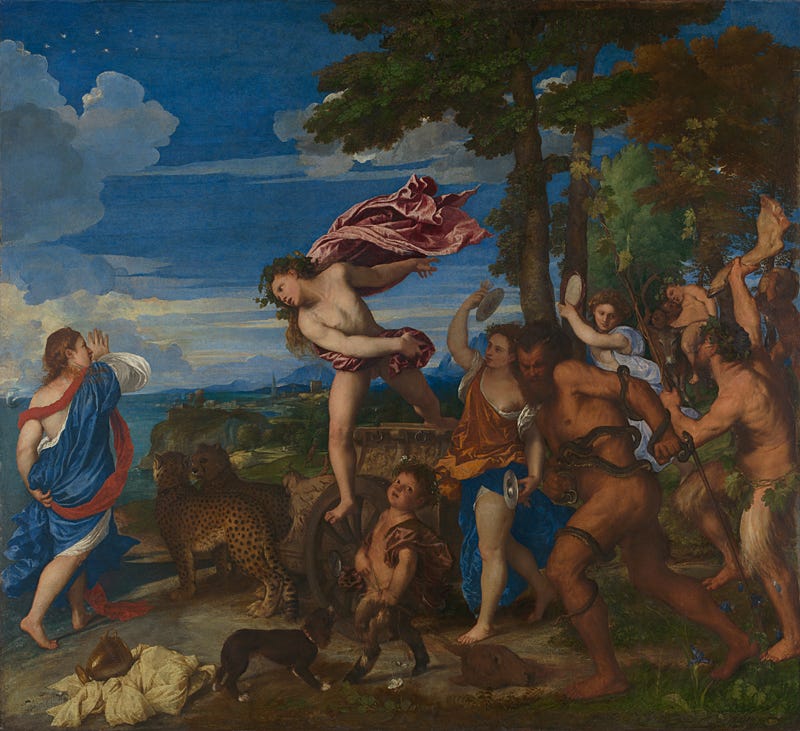
“It is the task of the translator to release in his own language that pure language which is under the spell of another, to liberate the language imprisoned in a work in his re-creation of that work.”
Walter Benjamin, “The Task of the Translator” (1923)
The full set of sixteen translations is available here.
I really enjoyed reading this essay; it’s truly fascinating to see that higher models do not directly mean they are better - at least in literal translation and folk poems.
Being a native Hindi speaker from India, I did not have enough depth of understanding of the poem until I saw how you clearly dissected each word and smaller nuances.
I’ve been using ChatGPT for the most part for its directness and simpler personality. I might dig into Gemini more often now